
By Marc Gilman
Questions? Call (800) 927-9326 or email marc@gilmanagency.com
When you compare Medicare Advantage plans, you’ll see letters after the plan name: HMO, HMO-POS, PPO. They tell you how the plan’s network works, and they can matter as much as the premium. An HMO-POS is an HMO with a “point of service” option that covers some care outside the network. How much it covers depends on the plan.
Key Takeaways
-
An HMO covers care from its network, plus emergency and urgently needed care anywhere in the U.S.
-
An HMO-POS works like an HMO but adds some out-of-network coverage, usually at a higher cost and only for certain services.
-
Both usually have you choose a primary care doctor, and many require referrals to see specialists. Check each plan’s rules.
-
Read the plan’s Evidence of Coverage to see exactly which out-of-network services the POS covers and what they cost.
-
Need regular care outside the network, or spend part of the year away? Compare a PPO, too.
How Does a Medicare Advantage HMO Work?
A Health Maintenance Organization (HMO) plan covers your care when you use doctors, hospitals and other providers in its network.
-
You usually choose a primary care doctor from the network, who coordinates your care.
-
You may need a referral from that doctor to see a specialist. Many HMOs require referrals, but not all do.
-
Out-of-network care generally isn’t covered, so you’d pay the full cost.
-
The exceptions: emergency care, urgently needed care, and dialysis when you’re temporarily outside the service area are covered anywhere in the U.S.
In exchange for staying in network, HMOs often have lower premiums and copays.
What Does the “POS” Add?
“Point of service” means that each time you need care, at the point of service, you can choose to stay in network or, for certain services, go outside it. Everything else works like an HMO: the same network, primary care doctor and referral rules.
What varies from plan to plan:
-
Which services the POS covers. Some plans cover a wide range of out-of-network care. Others cover only a few services, such as certain dental or vision care.
-
What it costs. Out-of-network care usually means higher copays or coinsurance, and sometimes a separate deductible or yearly limit.
-
Whether it counts toward your out-of-pocket maximum. Out-of-network costs may not count toward the plan’s in-network limit, so check how it handles a bad year.
-
Whether you still need a referral or approval before going out of network.
The plan’s Evidence of Coverage spells all of this out, usually in the medical benefits chart.
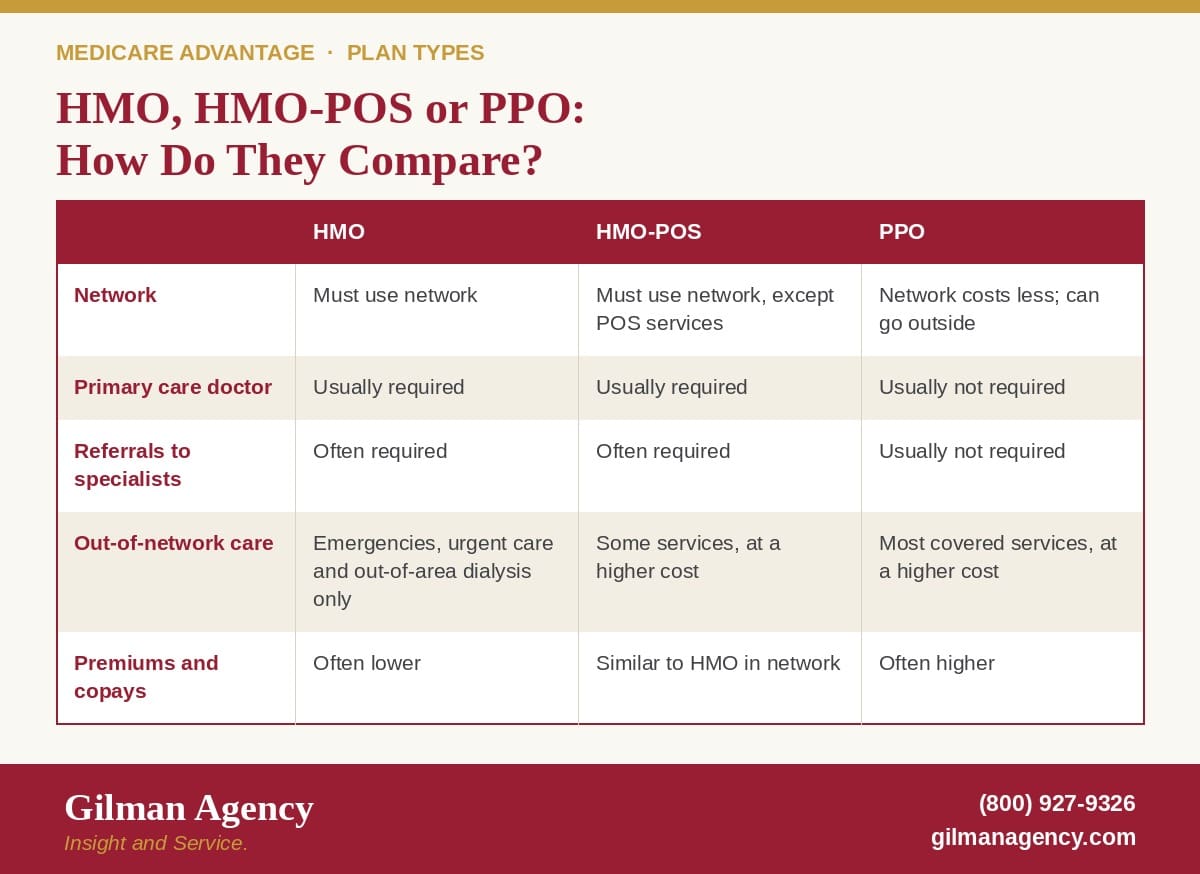
How Do HMO, HMO-POS and PPO Plans Compare?
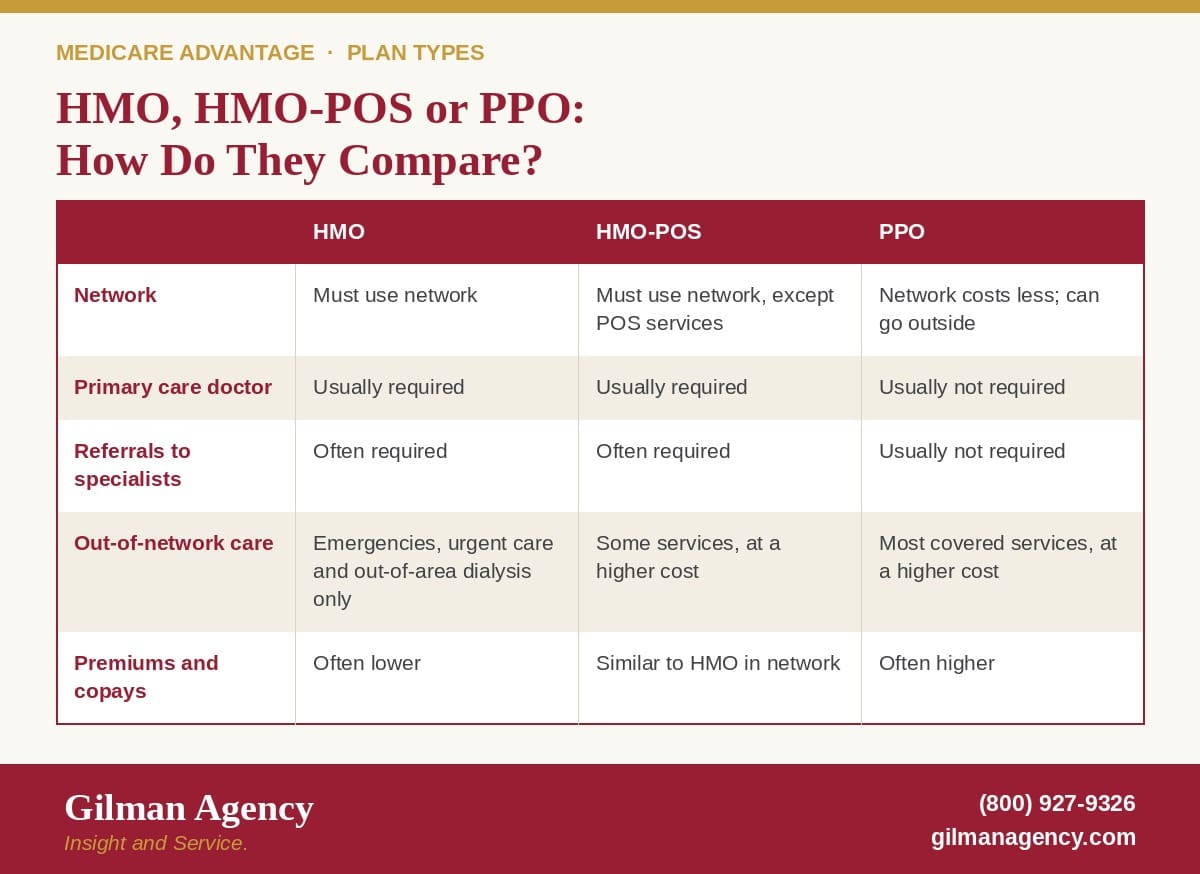
If you regularly see doctors outside the network, or split your year between New Hampshire and another state, a PPO is usually the plan type to compare. Our post on passive vs. aggressive PPO networks explains how PPOs differ.
Which Fits You? Questions to Ask
-
Are all my doctors and my hospital in the network? If yes, an HMO may cover everything you need at a lower cost.
-
Is there a doctor or service outside the network I want to keep? Check whether the HMO-POS covers that specific service out of network, and at what cost.
-
Do I mind getting referrals? If you’d rather go straight to specialists, check each plan’s referral rules.
-
Do I travel or live part of the year elsewhere? HMOs and most HMO-POS plans cover only emergency and urgent care outside the area. A PPO may fit better.
-
What would a bad year cost? Compare the out-of-pocket maximum, and whether out-of-network costs count toward it.
What New Hampshire Members Should Know for 2027
-
Fewer choices statewide. Three companies offer Medicare Advantage plans in New Hampshire for 2027, so the plan types available to you depend on your county and ZIP code.
-
Some HMO-POS plans are ending. UnitedHealthcare’s AARP Medicare Advantage NH-1 (HMO-POS) ends December 31, 2026, in Hillsborough, Merrimack, Rockingham and Strafford counties. If that’s your plan, you need a new one, and you have the right to buy a Medigap plan with no health questions.
-
Plan types can change at renewal. Your 2027 Annual Notice of Change shows whether your plan’s network or out-of-network benefits are changing.
Annual Enrollment ends December 7.
Where Does Insurance Planning Fit In?
The network you choose shapes what a hospital stay or specialist visit will cost you. If you choose an HMO or HMO-POS to keep premiums low, a hospital indemnity plan can help with the daily hospital copays those plans charge. And if keeping every doctor matters more than the premium, Original Medicare with a Medigap plan has no network at all.
What To Do Next
Bring a list of your doctors, your hospital and your prescriptions, and we’ll check which plan types in your ZIP code cover them. Call Gilman Agency at (800) 927-9326 or email marc@gilmanagency.com. We meet by phone, by video or in person in Bedford.
Prefer that we call you? Request a call here.
We do not offer every plan available in your area. Please contact Medicare.gov or 1-800-MEDICARE to get information on all of your options.
This article is for general information only. Networks, referral rules and out-of-network benefits vary by plan and can change each year. Check the plan’s Evidence of Coverage before you enroll. Gilman Agency is a licensed insurance agency.


