

By Marc Gilman
Call (800) 927-9326 | Email
A Dual Eligible Special Needs Plan (D-SNP) is a Medicare Advantage plan for people who have both Medicare and Medicaid. If your Medicaid ends, often because a renewal form wasn’t returned or your income or savings went over the limit, you don’t lose your plan overnight. But your costs can change quickly, and the deadlines matter.
Here’s what happens, step by step, and how to protect your coverage.
Key Takeaways
-
You get a grace period. Federal rules let your D-SNP keep you enrolled for 30 days to 6 months if you’re expected to get Medicaid back. Each plan sets its own length.
-
Your costs can go up right away. During the grace period, the plan still covers your Medicare benefits, but you may be billed the plan’s copays and your Part B premium, which Medicaid used to pay.
-
If Medicaid isn’t restored, the plan must disenroll you, with at least 30 days’ notice.
-
You then get a Special Enrollment Period to choose another Medicare Advantage plan, or Original Medicare with a drug plan.
-
Extra Help usually continues through the end of the calendar year, and sometimes through the next year.
-
The best protection is simple: open your mail and return every Medicaid renewal form right away.
First, Know Your Medicaid Category
About 12 million Americans have both Medicare and Medicaid. Nearly 9 million get full Medicaid benefits; about 3 million get partial help through a Medicare Savings Program.
Your category decides what you pay on a D-SNP today, and what changes if you lose it:
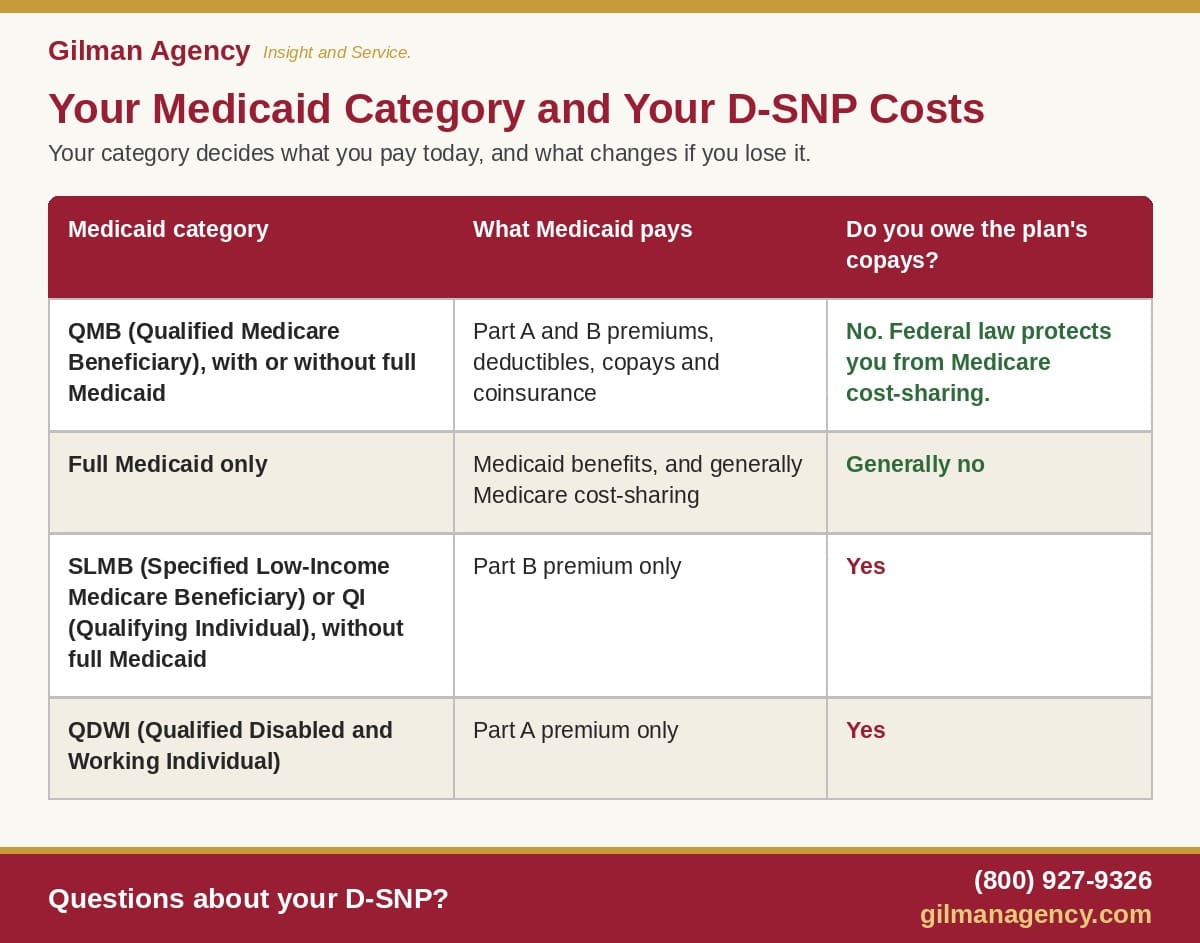
Every D-SNP is either a zero-dollar cost-sharing plan or a non-zero plan, and Medicare Plan Finder shows which. Each D-SNP’s contract with the state also decides which Medicaid categories it accepts, so one plan may take you and another may not.
In New Hampshire, the QMB income limit is $1,330 a month for one person, after allowed deductions, with a $9,950 resource limit (NH DHHS, October 2026).
The Grace Period
Medicare calls it deemed continued eligibility. Under federal rules (42 CFR 422.52(d)), if your D-SNP expects you to regain Medicaid within 6 months, it can keep you enrolled for at least 30 days and up to 6 months.
-
Each plan picks its own length within that range, applies it to every member the same way, and must tell members what it is.
-
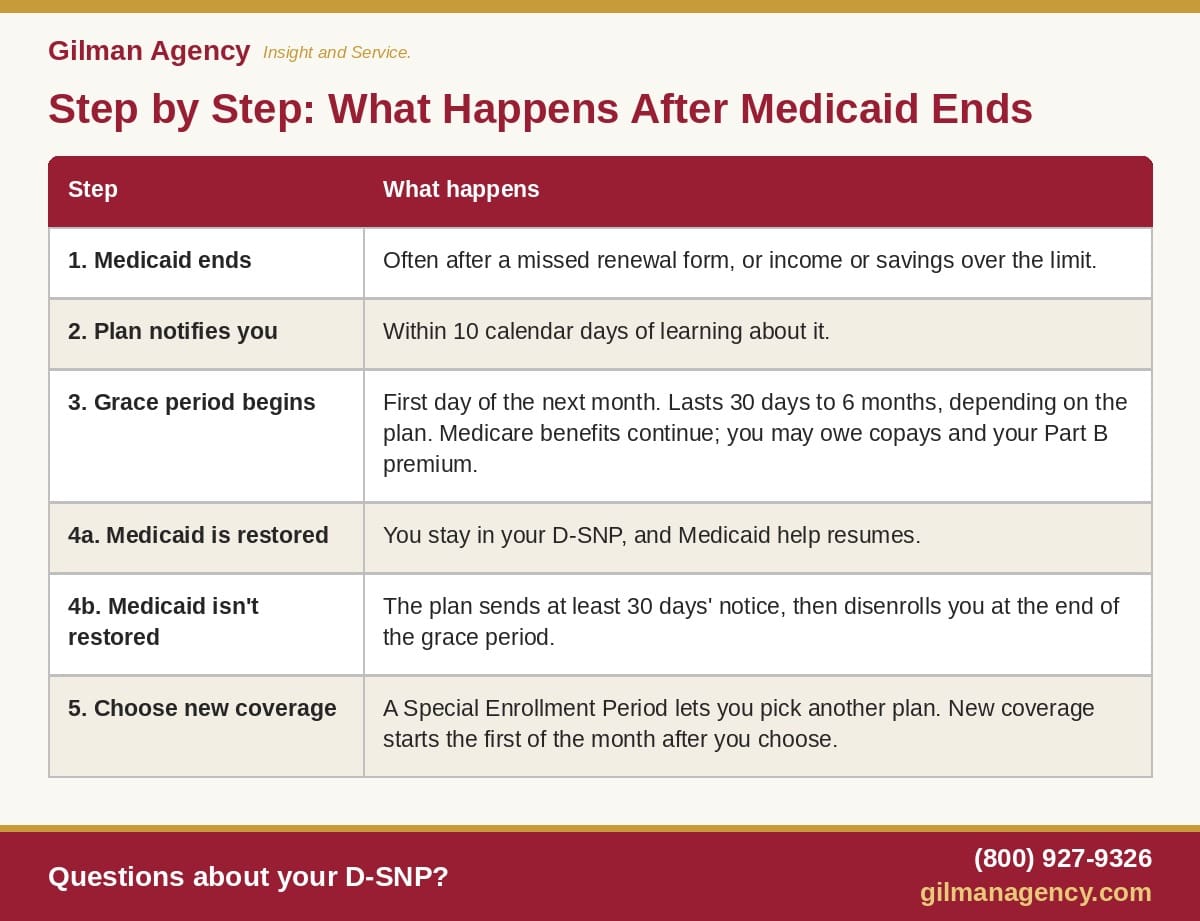
It starts on the first day of the month after the plan learns your Medicaid ended and notifies you.
-
The plan must send you a notice within 10 calendar days of learning about the change.
What you get, and what you pay
During the grace period, the plan must keep covering all your Medicare benefits and the plan’s extra benefits. The copay amounts don’t change.
What does change: Medicaid isn’t paying anymore. Your doctors can bill you the plan’s copays and coinsurance, and the state stops paying your Medicare premiums. Your Part B premium will generally come out of your Social Security check again. That’s why getting Medicaid back quickly matters.
Step by Step: What Happens After Medicaid Ends
Your Options After the Grace Period
Special Enrollment Period. If you lose Medicaid, you can change plans outside Annual Enrollment. Under CMS’s 2027 guidance, this window opens the month your Medicaid status changes and closes three calendar months after your D-SNP disenrollment takes effect. You can choose:
-
Another Medicare Advantage plan, with or without drug coverage
-
Original Medicare with a Part D drug plan, and possibly a Medigap policy
There’s also a separate one-time window for drug coverage: within three months of losing Medicaid or Extra Help (or of being notified, if later), you can join or leave a Part D plan.
Don’t wait until the last month. Choosing early avoids a gap, and if you’re considering a Medigap policy, outside your guaranteed-issue rights an insurer can ask health questions.
How long does Extra Help last?
People with Medicaid get Extra Help (help with Part D drug costs) automatically. That status doesn’t end the day Medicaid does:
-
If you had Medicaid only from January through June, Extra Help generally continues through December of that year.
-
If you had Medicaid in any month from July through December, it generally continues through December of the following year.
-
In September, Social Security mails a gray notice to people whose automatic Extra Help is ending, with an application inside. Fill it out and send it back. Many people lose Extra Help only because they didn’t.
How To Keep Your Medicaid in New Hampshire
CMS recommends three simple steps:
-
Keep your contact information current with NH DHHS and your plan: address, phone and email.
-
Watch your mail and email for letters about your Medicaid coverage.
-
Return your renewal form right away if you get one.
A few more tips:
-
Watch for income changes. Social Security raises can push income over the limit. Report changes, and ask whether you qualify for a different program, such as a Medicare Savings Program.
-
If your Medicaid ends, act during the grace period. Call NH DHHS to find out why and whether you can reapply, and call us to look at your plan options.
-
Free help: NH ServiceLink, at 1-866-634-9412, offers free Medicare and Medicaid counseling.
To apply or ask about your case, contact NH DHHS online through NH EASY, or call 1-844-275-3447 (TDD 1-800-735-2964), Monday through Friday, 8 a.m. to 4 p.m.
What To Do Next
If you’re on a D-SNP and got a letter that your Medicaid is ending, or you’re worried about your next renewal, call us. We’ll help you understand your plan’s grace period and your options, and line up coverage so there’s no gap.
Call Gilman Agency at (800) 927-9326 or email .
We do not offer every plan available in your area. Please contact Medicare.gov, 1-800-MEDICARE to get information on all of your options.
This article is for educational purposes only and isn’t legal advice or an eligibility determination. Medicaid eligibility is decided by NH DHHS. Each plan sets its own grace period within federal rules; check your plan’s notice and Evidence of Coverage. Gilman Agency is not affiliated with or endorsed by the U.S. government or the federal Medicare program.


