
By Marc Gilman
Call (800) 927-9326 | Email marc@gilmanagency.com
Massachusetts has unique Medigap rules, being one of only three states with state-standardized plans. In Massachusetts, the Medigap options differ from the federal standardized plans (A through N) found in most states.. There are only three plan types, everyone pays the same premium regardless of age or health, and you can generally enroll in any month.
That simplicity changes the decision. Here’s how Massachusetts Medigap plans work, how they compare with Medicare Advantage, and how to decide which fits you for 2027. For a deeper look at the state’s Medigap rules, see how Medicare Supplement plans work in Massachusetts.
Key Takeaways
-
Three plans, not ten: Massachusetts replaces lettered Medigap plans with Core, Supplement 1 and Supplement 1A. Supplement 1 is open only to people eligible for Medicare before January 1, 2020.
-
No age or health pricing: Medigap premiums are community rated, so everyone with the same policy pays the same premium.
-
Enrollment is flexible: The state says Massachusetts offers continuous open enrollment, so you can generally join or switch a Medigap plan in any month.
-
That changes the trade-off: In many states, choosing Medicare Advantage can make it hard to buy Medigap later. In Massachusetts, that risk is much lower.
-
The real choice is cost structure and network: Medigap means a higher, predictable premium and any Medicare provider. Medicare Advantage means lower premiums, networks and copays, plus extras.
How Is Massachusetts Different?
Most states use the federal lettered Medigap plans, A through N. Massachusetts is one of three states with its own standardized system, so you won’t find Plan G or Plan N here. Instead, every carrier sells the same three plan designs.
Two other rules matter just as much:
-
Community rating: Your premium doesn’t depend on your age or medical history. A 66-year-old and an 86-year-old with the same policy from the same carrier pay the same amount.
-
Continuous open enrollment: The Massachusetts Division of Insurance’s 2026 guide says the state “offers continuous open enrollment,” so you can enroll, switch or drop a Medigap plan in any month, with coverage starting the first of the next month.
Because the plan designs are identical across carriers, the main differences between carriers are price, service and any optional riders.
Core vs. Supplement 1 vs. Supplement 1A: What Does Each Cover?
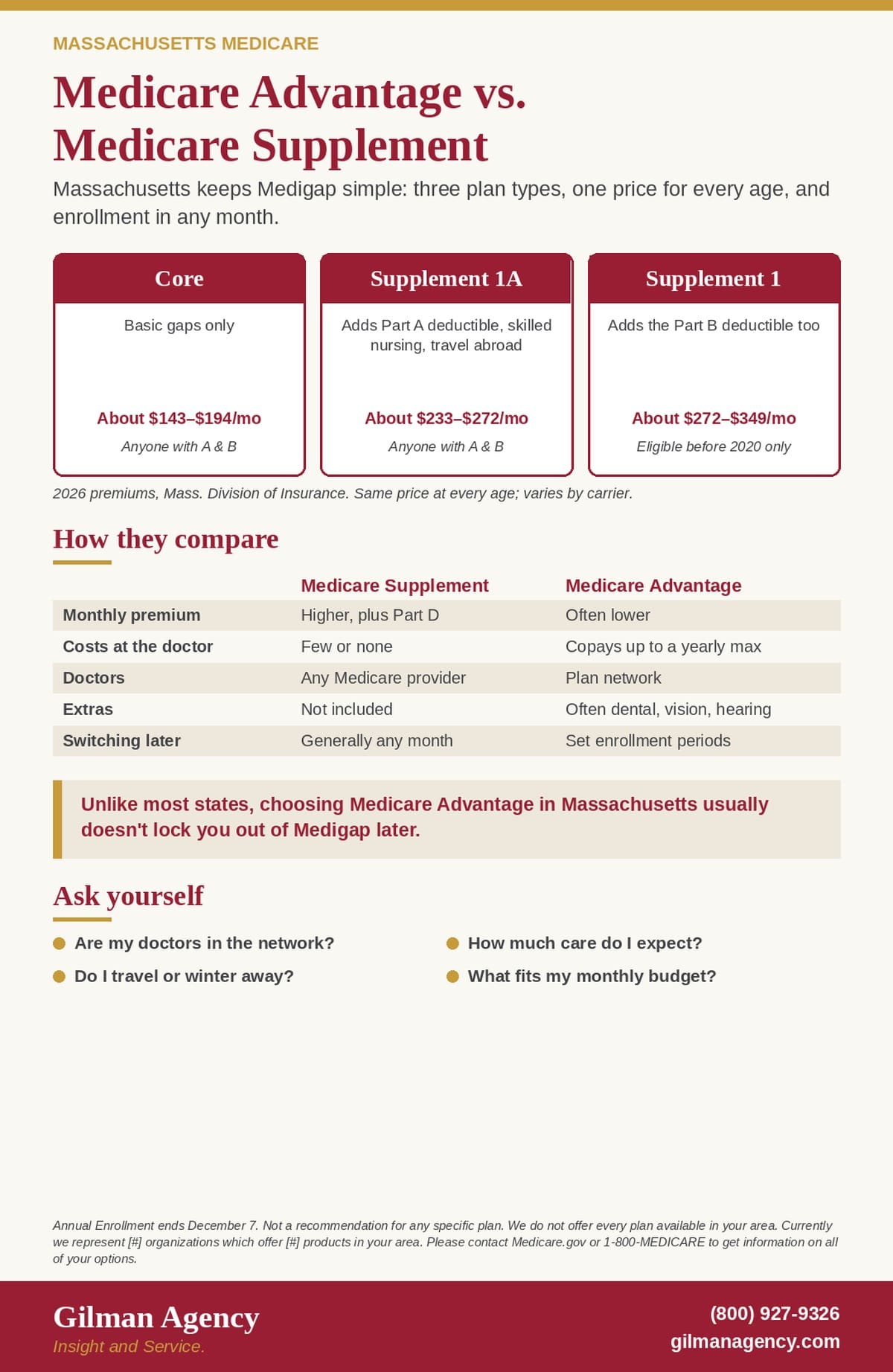
All three plans cover Medicare’s basic gaps. The differences come down to deductibles, skilled nursing care and travel.

Premiums are from the Massachusetts Division of Insurance’s 2026 chart. They vary by carrier, not by age, and the 2027 rates may differ. Some carriers offer optional dental or preventive care riders for an added cost.
For most people new to Medicare, the choice is between Core and Supplement 1A. The gap between them is mainly the $1,736 hospital deductible and skilled nursing coinsurance. One hospital stay can make up much of the yearly premium difference.
When Can You Buy a Medicare Supplement in Massachusetts?
This is where Massachusetts differs most from other states.
-
In most states, your best chance to buy Medigap without health questions is a one-time, six-month window when you first get Part B. If you choose Medicare Advantage and later want Medigap, you may be turned down or charged more because of your health.
-
In Massachusetts, the state says you can enroll in, switch or drop a Medigap plan in any month, and premiums don’t depend on medical history. So choosing Medicare Advantage now doesn’t usually lock you out of Medigap later.
Two cautions. First, the carriers selling Medigap can change. Humana, for example, stopped selling Medicare Supplement plans in Massachusetts on April 1, 2026. Second, Medicare Advantage has its own timing: you generally can change or leave a Medicare Advantage plan only during Annual Enrollment (October 15 to December 7) or the Medicare Advantage Open Enrollment Period (January 1 to March 31). Confirm the current rules with the carrier before you make a switch.
Medicare Advantage vs. Medicare Supplement: How Do They Compare?
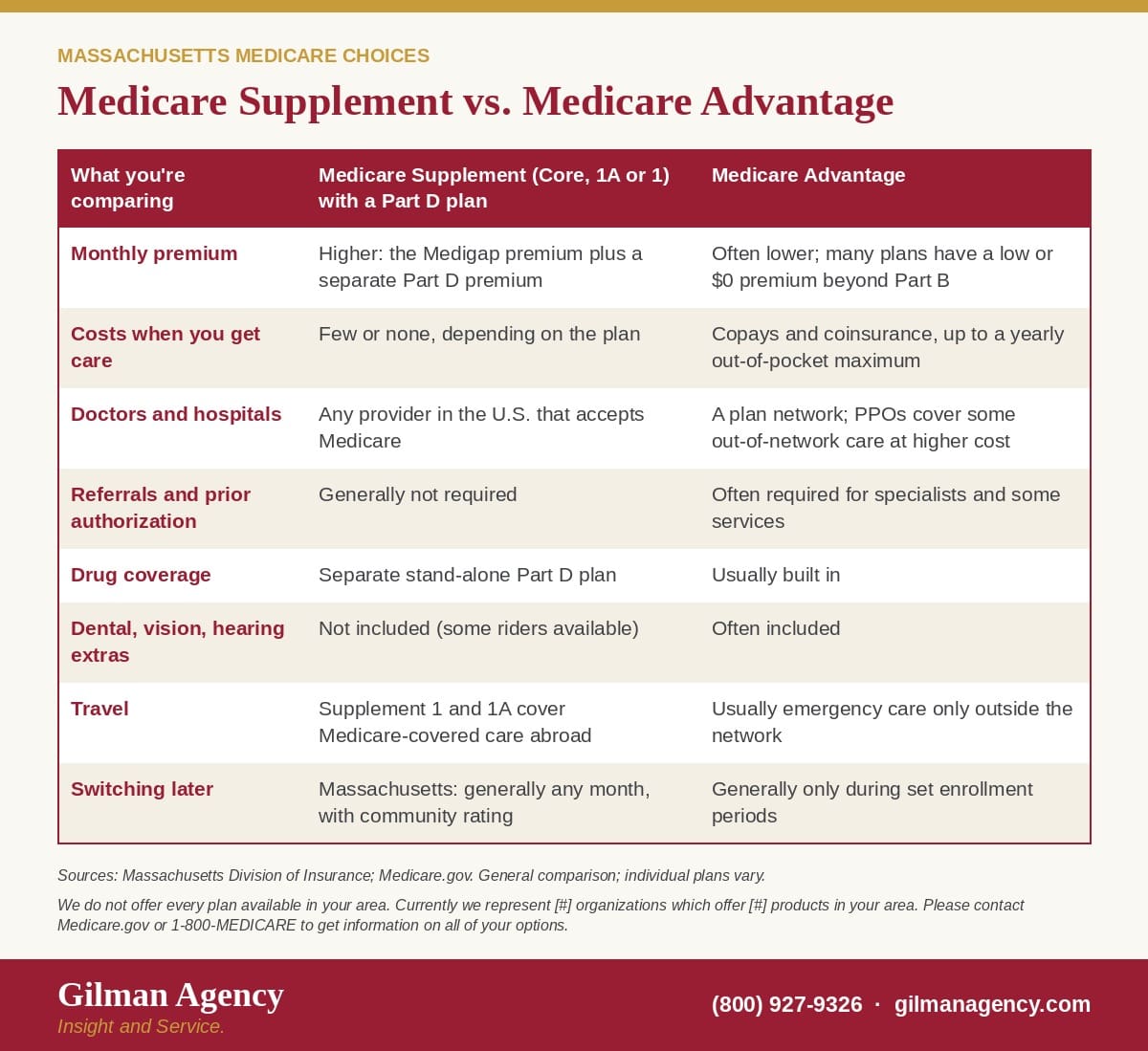
Neither is better for everyone. The right choice depends on how often you see doctors, which doctors and hospitals you use, how much you travel, and whether you’d rather pay more each month for predictable costs or less each month with costs when you use care.
Questions Worth Asking Yourself
-
Are my doctors and hospitals in the plan’s network? Check each one by name for 2027, including any Boston-area specialists you see.
-
How much care do I expect to use? Frequent visits, ongoing treatment or a planned surgery tip the math toward a Supplement plan.
-
Do I spend time out of state or abroad? Supplement plans work with any Medicare provider nationwide, and 1A and Supplement 1 cover Medicare-covered care abroad.
-
What can my monthly budget handle? Add the Medigap premium and a Part D premium, then compare that with a Medicare Advantage premium plus likely copays.
-
Do I want dental, vision and hearing coverage built in? Medicare Advantage often includes them; with a Supplement, you’d buy them separately.
-
Am I eligible for Supplement 1? Only if you were eligible for Medicare before January 1, 2020.
Where Does Insurance Planning Fit In?
In Massachusetts, the Medicare decision is less about locking in coverage before a window closes and more about matching your coverage to how you actually use care. That makes a yearly review worthwhile: your health, your doctors and the carriers’ prices all change.
We start by learning your doctors, prescriptions and budget, then compare Medigap and Medicare Advantage options side by side, and only then make a recommendation. If you choose a Supplement plan, we’ll also help you pick a Part D plan that covers your medications.
What To Do Next
Medicare Annual Enrollment runs through December 7, and Medicare Advantage changes take effect January 1, 2027. Gilman Agency offers free, no-obligation Medicare reviews at our Somerville office or by phone.
-
Call: (800) 927-9326
-
Email: marc@gilmanagency.com
-
Request a call: Permission to Contact form
Sources: Massachusetts Division of Insurance, Medicare Supplement Plans Offered in Massachusetts 2026; Massachusetts Division of Insurance, Guide to Health Insurance for People with Medicare; Medicare.gov.
This article is for general educational purposes and reflects information available as of its publication date. Plan benefits, premiums, carrier participation and enrollment practices can change; confirm details with the carrier or at Medicare.gov. This is not a recommendation for any specific plan. We do not offer every plan available in your area. Please contact Medicare.gov or 1-800-MEDICARE to get information on all of your options.


