By Marc Gilman
Call (800) 927-9326 | Email
If you’re helping a parent or spouse with bathing, meals, medications and rides, you may be wondering whether you can be paid for it. Oftentimes you can, but it depends on who’s paying: Medicaid, the VA, a long-term care insurance policy, or your family.
About 48 million Americans care for an adult family member or friend without pay, according to AARP and the National Alliance for Caregiving. Here are the ways that care can be paid for in New Hampshire.
Key Takeaways
-
Medicare doesn’t pay family caregivers. It covers short-term skilled home health care, not ongoing help with daily living.
-
NH Medicaid can pay a family caregiver. Through Choices for Independence, an adult child or other relative can be hired. A spouse may be paid through Medicaid’s self-directed personal care option.
-
Veterans’ programs can pay family members, including spouses, through Veteran Directed Care, the VA family caregiver stipend, or a pension with Aid and Attendance.
-
Some long-term care insurance policies can pay family caregivers. Policies that pay a set cash amount usually can; policies that reimburse bills usually require licensed providers.
-
Families can pay a relative directly with a written caregiver agreement, which matters if Medicaid is ever needed later.
-
Home care aides in New Hampshire earn a median of $18.64 an hour, a useful benchmark for setting fair pay.
What Do Home Caregivers Earn?
Home health and personal care aides are paid more in New Hampshire than the national median. Federal wage data for May 2025:
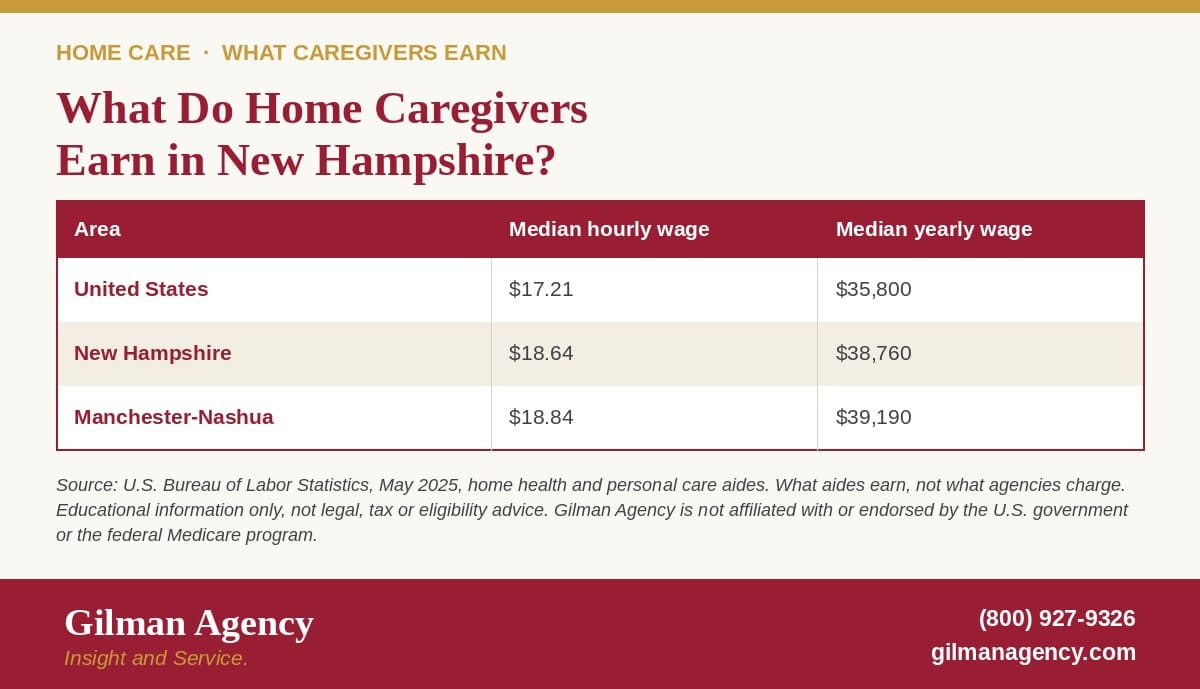
These are what aides earn, not what families pay. Agencies charge more than their aides’ hourly pay to cover payroll taxes, insurance, training and scheduling. If you’re paying a relative privately, the local median is a reasonable starting point for setting fair pay.
Medicare and NH Medicaid: Who Can Be Paid?
Medicare covers part-time skilled home health care, such as nursing or therapy after a hospital stay, from a Medicare-certified agency. It doesn’t pay for ongoing help with daily living, and it doesn’t pay family members.
NH Medicaid’s Choices for Independence (CFI) program helps adults who are 65 or older, or 18 to 64 with a disability, who need nursing-home-level care but want to stay at home. It has income and asset limits and a medical assessment.
Under CFI’s participant-directed and managed services, the person receiving care can choose and manage their own caregivers, with a financial management agency handling payroll and background checks. That’s how an adult child or other relative can be paid.
What about a spouse? State rules say CFI waiver services from a spouse aren’t covered. Since 2023, though, NH Medicaid has had a self-directed personal care option that lets people hire a “legally liable relative,” which can include a spouse, as their paid caregiver. Some home care providers advertise spouse pay in New Hampshire, so ask ServiceLink or the provider which program the pay would come through.
Other limits:
-
A guardian or someone acting under a power of attorney can’t be the paid caregiver under CFI.
-
Caregivers must pass a background check.
Unpaid help is available too. The NH Family Caregiver Support Program offers counseling, training and respite breaks for family caregivers. It doesn’t pay wages.
To start, call NH ServiceLink, New Hampshire’s aging and disability resource center, at 1-866-634-9412, or apply for Medicaid through NH EASY.
Programs for Veterans
If the person you care for is a veteran, the VA has three programs that can pay a family caregiver:
-
Veteran Directed Care: veterans enrolled in VA health care who need help with daily living get a flexible budget to hire their own caregiver, including a son, daughter, sibling or spouse.
-
Program of Comprehensive Assistance for Family Caregivers: a monthly stipend for a family caregiver of a veteran with a VA disability rating of 70% or higher who needs at least six months of in-person care. The amount is based on federal pay rates where the veteran lives.
-
Aid and Attendance: an extra amount added to a VA pension for veterans or surviving spouses who need help with daily activities. It can be used to pay a caregiver, including a family member. Income and net worth limits apply.
The VA Caregiver Support Line is 855-260-3274.
Long-Term Care Insurance: Can It Pay a Family Member?
It depends on how the policy pays benefits:
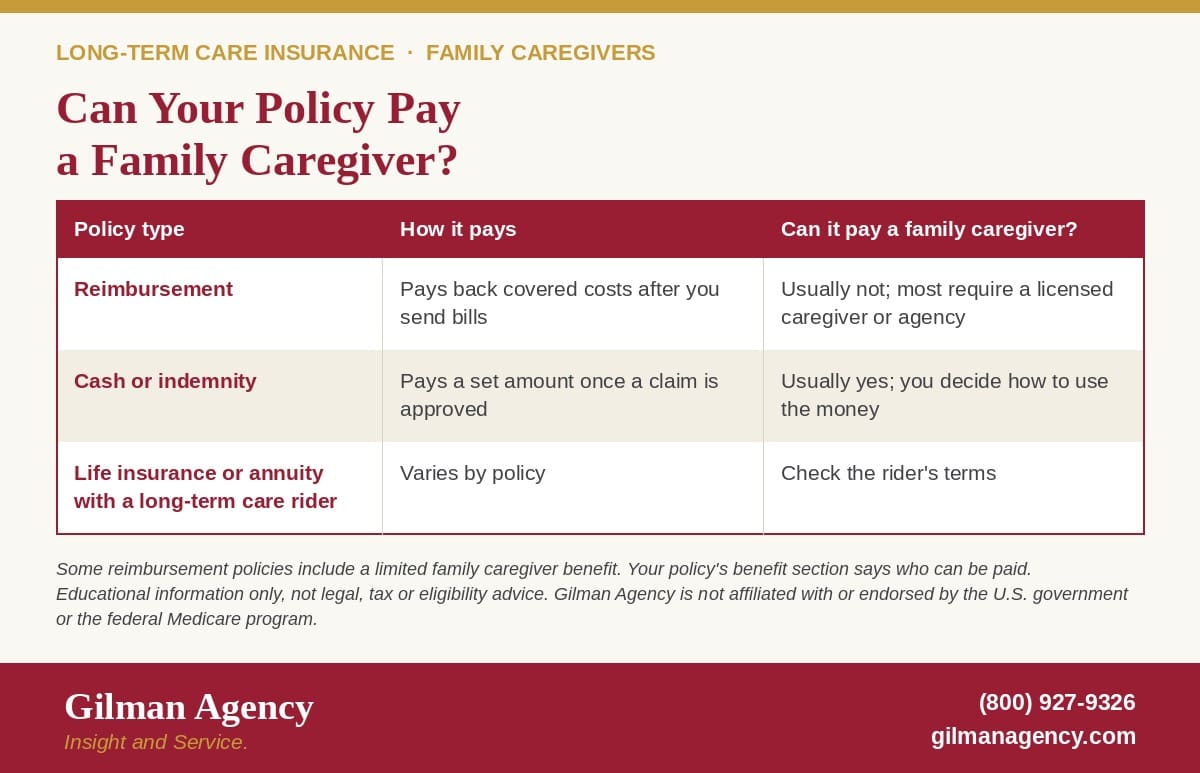
Some reimbursement policies include a limited benefit for informal or family caregivers, or for caregiver training. If you already have a policy, the benefit section of your contract says who can be paid. If you’re shopping for coverage, ask how each policy treats family care before you buy.
Paying a Family Caregiver Privately
Many families pay a relative from the care recipient’s own savings. If you do, put it in writing:
-
Use a written caregiver agreement (sometimes called a personal care agreement) that lists the duties, hours, pay rate and start date. Pay going forward, not for past care.
-
Keep the pay reasonable. The local median wage for home care aides is a good benchmark.
-
Keep records of hours worked and payments made.
Why it matters: if your loved one later needs Medicaid for long-term care, NH DHHS looks back at money given away in the past five years. Payments to family without a written agreement can be treated as gifts and delay Medicaid coverage.
Taxes: pay to a family caregiver is usually taxable income, and the family paying may have household-employer tax duties. An elder law attorney and a tax professional can set this up correctly.
Registration: New Hampshire requires people who advertise home care services for pay to register with the state, but someone caring only for a family member is exempt.
What To Do Next
If you’re caring for someone now, start with the program that fits: NH ServiceLink for Medicaid’s Choices for Independence, or the VA if your loved one is a veteran. If you have a long-term care policy, review its benefit section for family caregiver coverage.
If you’re planning ahead, we can review long-term care insurance and life insurance or annuity options with long-term care benefits, including how each treats care from family.
Call Gilman Agency at (800) 927-9326 or email .
We do not offer every plan available in your area. Please contact Medicare.gov or 1-800-MEDICARE to get information on all of your options.
This article is for educational purposes only and isn’t legal, tax or eligibility advice. Medicaid eligibility is decided by NH DHHS, and VA benefits by the Department of Veterans Affairs. Long-term care insurance benefits vary by policy; review your contract before relying on any benefit. Gilman Agency is not affiliated with or endorsed by the U.S. government or the federal Medicare program.