
By Marc Gilman
Questions? Call (800) 927-9326 or email
Key Takeaways
-
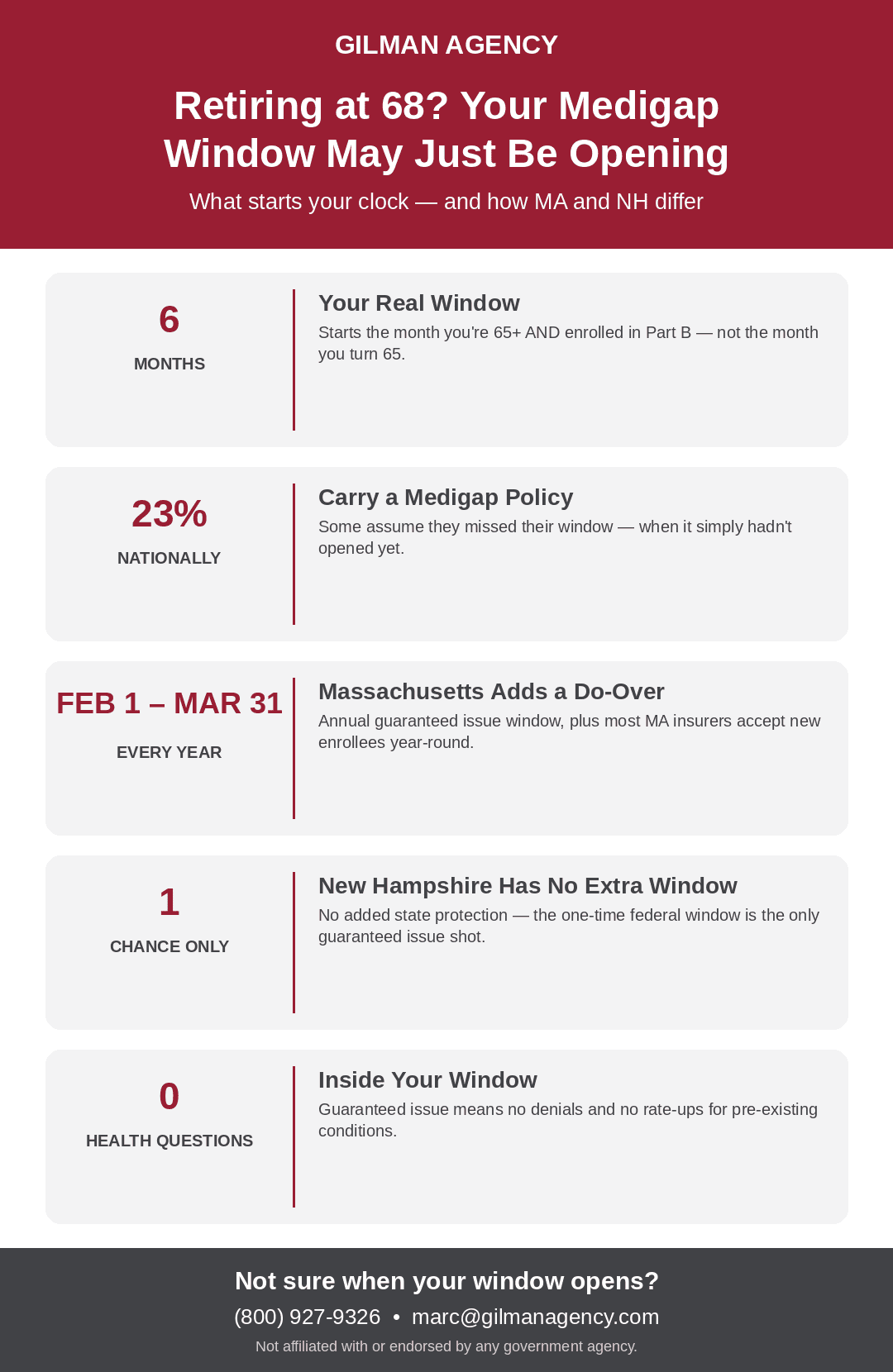
Your Medigap Open Enrollment Period is tied to your Part B start date, not your 65th birthday — if you delayed Part B because you had employer coverage, your window is likely just opening now.
-
During that 6-month window, insurers can’t deny you coverage or charge more based on your health — this is called a guaranteed issue right.
-
Once that window closes without a state-level protection in place, insurers can use medical underwriting to deny you or raise your rate.
-
Massachusetts is one of the few states that goes further: an annual guaranteed issue window every February 1–March 31, plus most insurers there voluntarily accept new Medigap applicants year-round, regardless of health.
-
New Hampshire has no equivalent state protection — the one-time federal 6-month window is the only guaranteed issue opportunity most NH residents will get, which makes getting it right the first time more important.
What Actually Determines Your Medigap Window?
Medigap, also called Medicare Supplement Insurance, helps cover the deductibles, copays, and coinsurance that Original Medicare leaves you responsible for. But you can only enroll in it once you’re enrolled in Medicare Part B — and that’s the detail that trips people up.
Your 6-month Medigap Open Enrollment Period begins the first month you’re both 65 or older and enrolled in Part B. If you kept working past 65 and stayed on employer coverage, you likely delayed Part B on purpose — which means your Medigap window didn’t start at 65. It starts now, whenever your Part B coverage actually begins, whether that’s at 66, 68, or later.
During this window:
-
You can’t be denied coverage based on pre-existing conditions
-
You’ll generally see the best rates a given insurer offers
-
You have guaranteed issue rights — no medical underwriting allowed
Once the window closes, insurers are generally free to ask health questions, charge more, or turn you down entirely — unless your state says otherwise.
Why the “Only 23%” Number Matters
According to Kaiser Family Foundation research, only about 23% of Medicare beneficiaries carry a Medigap policy nationally. Some of that is by choice — Medicare Advantage covers a lot of ground for a lot of people. But some of it is people who assumed they’d missed their shot, when in fact their real window simply hadn’t opened yet because they’d delayed Part B in good faith.
Massachusetts: You Have More Room Than Most States
If you’re retiring in Massachusetts, the rules are noticeably more forgiving than the federal baseline:
-
The state requires insurers to offer an annual guaranteed issue open enrollment period every February 1 through March 31 — a second guaranteed chance, every year, regardless of your Part B enrollment date
-
In practice, most Massachusetts insurers accept new Medigap enrollees year-round on a guaranteed issue basis, not just during that window
-
Massachusetts community-rates Medigap premiums, meaning your rate doesn’t climb just because you’re older than the person next to you with the same plan
-
The state also prohibits pre-existing condition waiting periods, so coverage starts clean
That combination makes Massachusetts one of the more forgiving states in the country if your enrollment timing wasn’t perfect.
New Hampshire: The Federal Window Is What You Get
New Hampshire doesn’t have its own guaranteed issue law layered on top of the federal rule. That means:
-
Your one 6-month window, tied to your Part B start date, is the guaranteed issue opportunity — there’s no annual do-over
-
Miss it, and insurers in New Hampshire can medically underwrite your application, same as most states
-
Guaranteed issue trial rights still apply if you qualify — for example, if you tried Medicare Advantage for the first time and want to switch back to Original Medicare with Medigap within 12 months
If you’re retiring in New Hampshire, timing this correctly the first time matters more than it does just across the border in Massachusetts.
What Late Retirees Should Actually Do
Whether you’re in Massachusetts, New Hampshire, or anywhere else, the same short list applies:
-
Confirm your exact Part B effective date — that date, not your birthday, is what starts your clock
-
Start comparing Medigap plans as soon as that date is confirmed, not after
-
Decide between Medigap and Medicare Advantage deliberately — they solve different problems, and switching later isn’t always guaranteed issue
-
Work with a licensed advisor who knows your state’s specific rules, since Massachusetts and New Hampshire genuinely play by different playbooks here
What To Do Next
Missing your 65th birthday doesn’t mean you missed your Medigap opportunity — it means the real clock started later than you may have assumed. But knowing exactly when that window opens, and what your state does or doesn’t add on top of the federal rules, is the difference between guaranteed issue pricing and a medically underwritten application.
If you’re retiring soon and want to confirm your Part B date and Medigap timing before you enroll, reach out and we’ll map it out together.
Questions? Call (800) 927-9326 or email


