By Marc Gilman
Call (800) 927-9326 | Email
Many 2027 Medicare Advantage plans advertise extras like a monthly card for groceries, utilities or rent. On most plans, those are Special Supplemental Benefits for the Chronically Ill (SSBCI), and only members who meet specific health criteria can use them.
If you’re comparing plans before Annual Enrollment ends December 7, here’s how SSBCI eligibility works.
Key Takeaways
-
SSBCI is only for qualifying members. Enrolling in a plan that offers SSBCI doesn’t mean you’ll get the benefit.
-
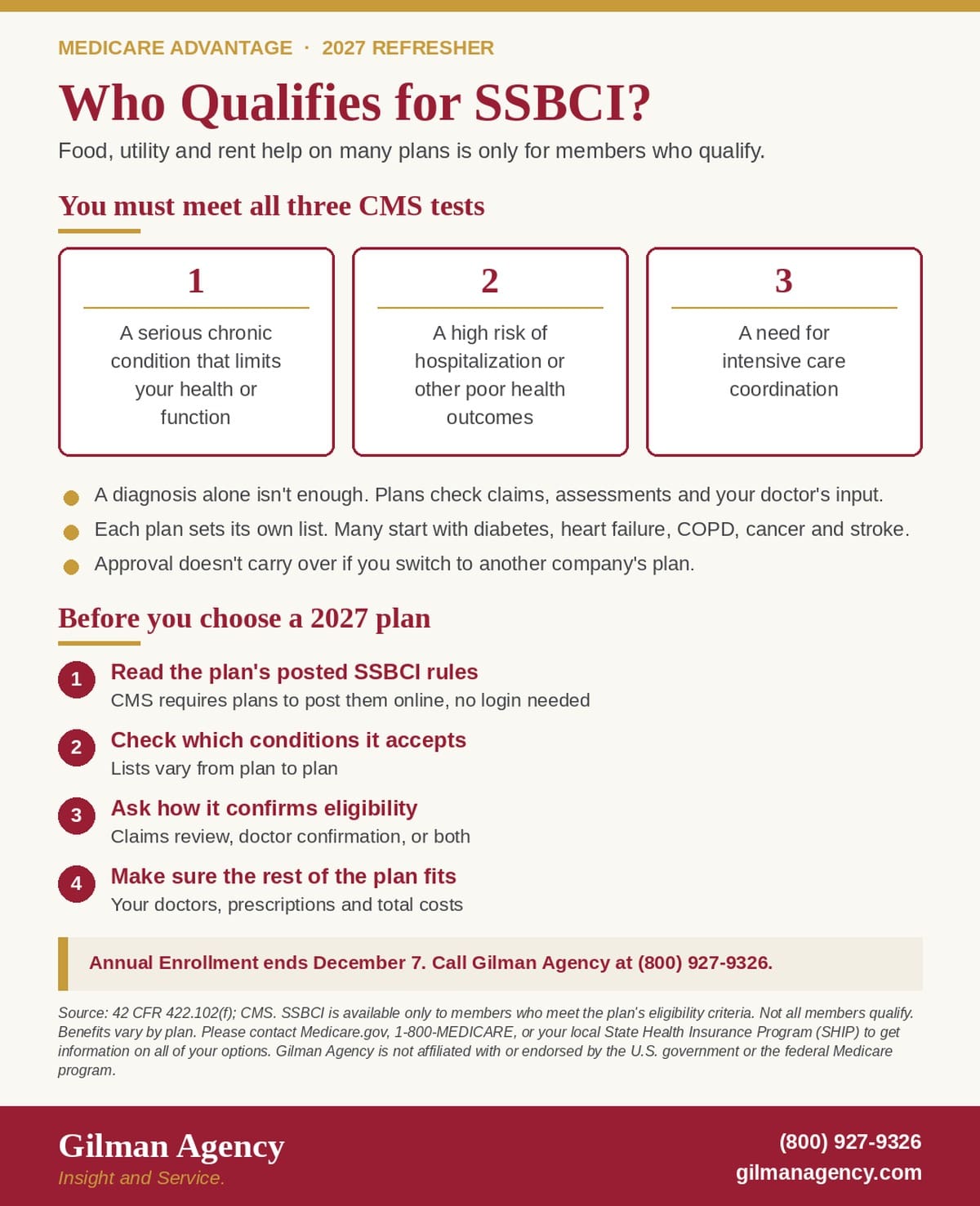
You must meet all three CMS tests: a serious chronic condition, a high risk of hospitalization or other poor outcomes, and a need for intensive care coordination.
-
A diagnosis alone isn’t enough. Plans look at claims, health assessments and your doctor’s input.
-
Each plan sets its own conditions list and rules and must post them on its website.
-
Benefits can include food, utilities, rent and more, but never alcohol, tobacco or non-healthy food.
What Is SSBCI?
Medicare Advantage plans can offer supplemental benefits beyond Original Medicare, like dental, vision and hearing. Those are generally available to every member of the plan.
SSBCI is a separate category Congress created in the Bipartisan Budget Act of 2018 for members with serious chronic illness. Plans can offer these benefits only to qualifying members, and the benefits don’t have to be strictly medical. A grocery allowance, help with a utility bill or pest control for someone with asthma can count, as long as the plan can show it’s reasonably expected to improve or maintain the member’s health or function.
Through 2025, some plans offered similar extras through a Medicare pilot program (the Value-Based Insurance Design model). That pilot has ended, so many of those extras now come through SSBCI and its eligibility rules.
The Three Tests You Must Meet
Federal rules define a “chronically ill enrollee” as someone who meets all three of these:
-
A serious chronic condition. One or more medically complex chronic conditions that are life-threatening or significantly limit your overall health or function.
-
A high risk of hospitalization or other poor health outcomes.
-
A need for intensive care coordination.
Plans can’t approve someone on a diagnosis alone. They have to show all three, using health risk assessments, claims or similar information.
Which conditions count?
Each plan sets its own list. Many start with the chronic conditions Medicare uses for Chronic Condition Special Needs Plans, such as:
-
Diabetes
-
Chronic heart failure and other cardiovascular disorders
-
Chronic lung disorders, such as COPD
-
Cancer
-
Stroke
-
End-stage kidney or liver disease
-
Dementia and certain neurologic disorders
Conditions like high blood pressure or obesity may count on some plans, but only if you also meet the other two tests.
How Plans Confirm You Qualify
Plans usually check eligibility two ways:
-
Automatically, by reviewing claims and diagnosis data. Some plans rerun this check every week, so members who qualify may be approved without doing anything.
-
Through your doctor, who can confirm your condition to the plan, often after an office visit. This helps new members whose history isn’t in the plan’s records yet.
Plans must keep written eligibility rules, document every decision (approved or denied), and keep the same standards for the whole year. If you’re approved, the plan sends a letter explaining the benefits and how to use them.
You can check the rules before you enroll. CMS requires every plan to post the eligibility rules and criteria for each SSBCI benefit on its public website, with no login or password, updated at the start of each plan year. That lets you see whether you’re likely to qualify before you choose a plan, not after.
Switching plans? Approval doesn’t carry over. If you move to a plan from a different company, the new plan checks your eligibility again under its own rules, so there may be a short wait before you can use the benefit.
What you can do: after you enroll, ask the plan how it determines SSBCI eligibility, and let your doctor know you may need them to confirm your condition.
What SSBCI Can and Can’t Cover
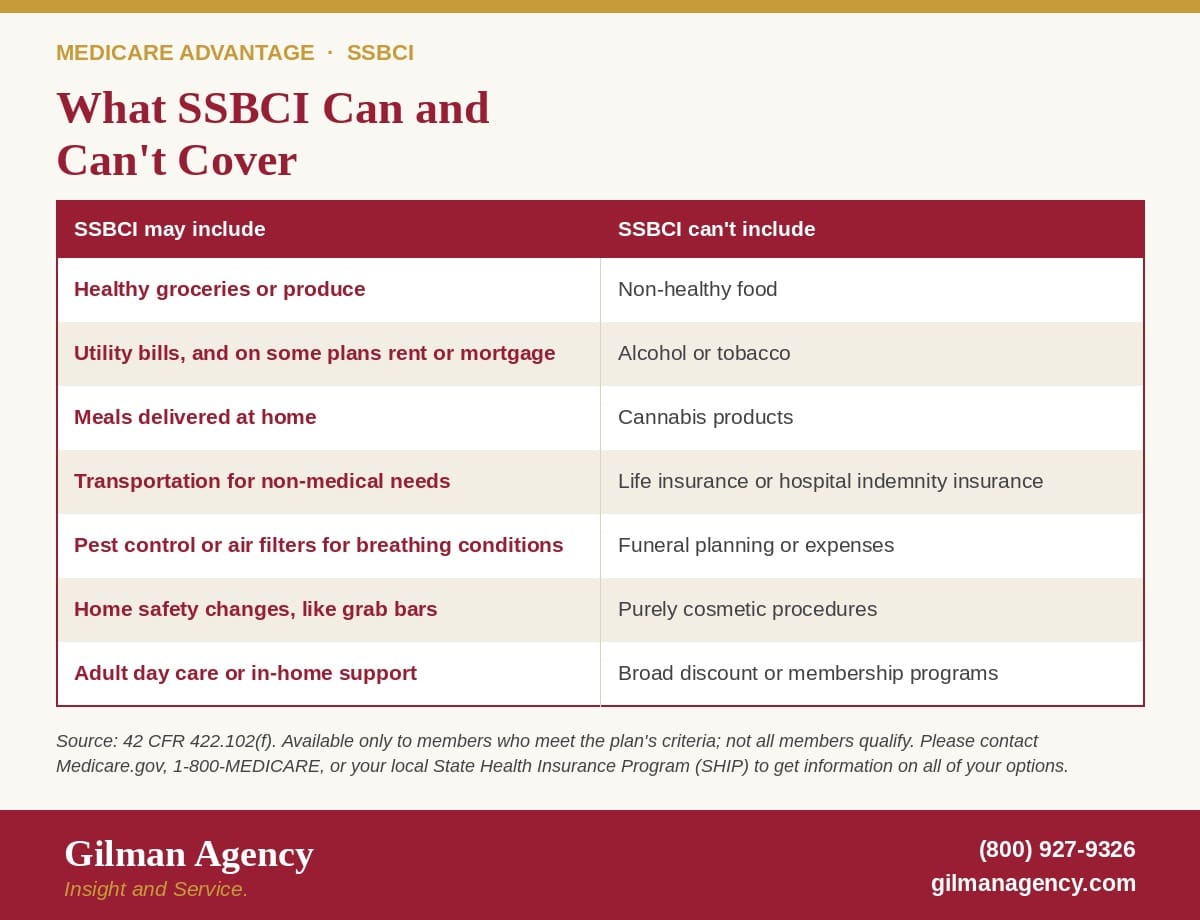
What each plan offers, how much, and which conditions qualify all vary by plan. Check the plan’s Evidence of Coverage or SSBCI page before you enroll.
SSBCI vs. C-SNP vs. D-SNP
These terms get mixed up. Here’s how they differ:
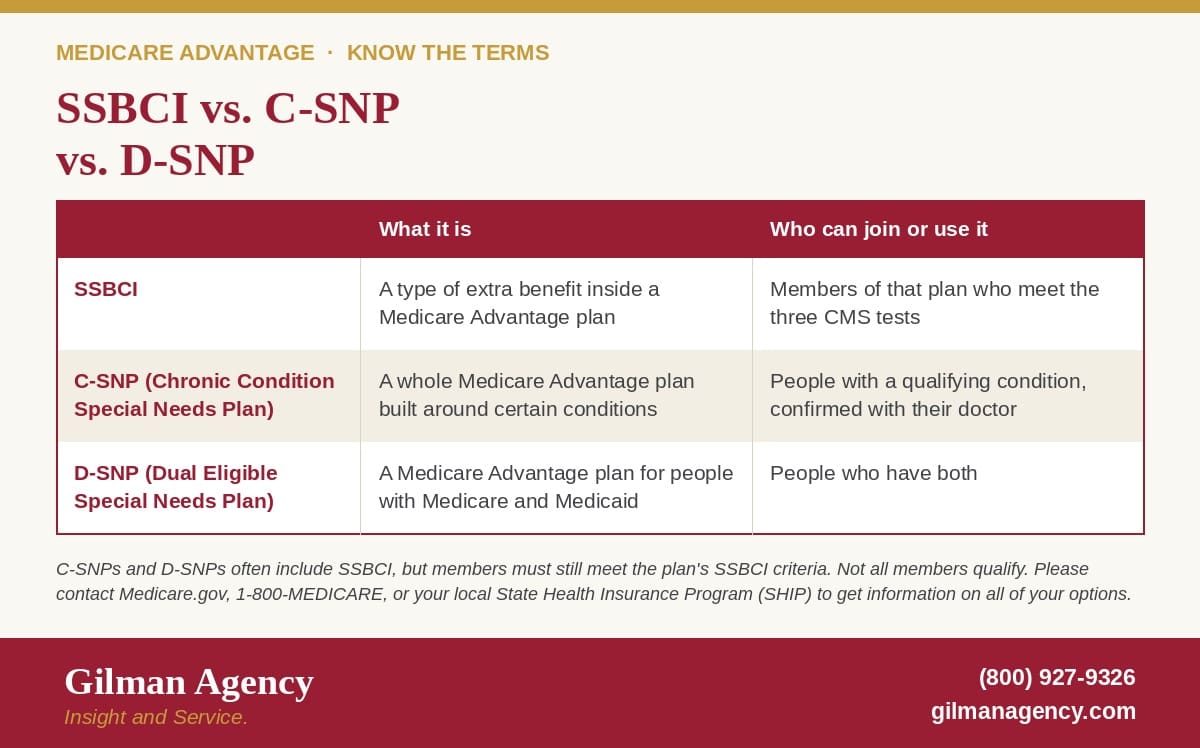
C-SNPs and D-SNPs often include SSBCI, but members still have to meet the plan’s SSBCI criteria to use those benefits. Regular Medicare Advantage plans, including PPOs, can offer SSBCI too. If you have a qualifying condition, you can generally join a C-SNP outside Annual Enrollment.
What To Do Next
If a 2027 plan’s food, utility or rent benefit is part of why you’re considering it, check three things before December 7: which conditions the plan accepts, how it confirms eligibility, and whether the rest of the plan (your doctors, your prescriptions and your total costs) still fits.
For how the cards themselves work in 2027, including checkout verification, what happens if a covered purchase is declined, and why unused balances don’t roll over, read New 2027 Rules for Medicare Advantage Flex Cards and Food/OTC Allowances.
Call Gilman Agency at (800) 927-9326 or email .
We do not offer every plan available in your area. Please contact Medicare.gov, 1-800-MEDICARE to get information on all of your options.
This article is for educational purposes only. Special supplemental benefits for the chronically ill are available only to members who meet the plan’s eligibility criteria; not all members qualify. Benefits, qualifying conditions and amounts vary by plan and service area. Gilman Agency is not affiliated with or endorsed by the U.S. government or the federal Medicare program.